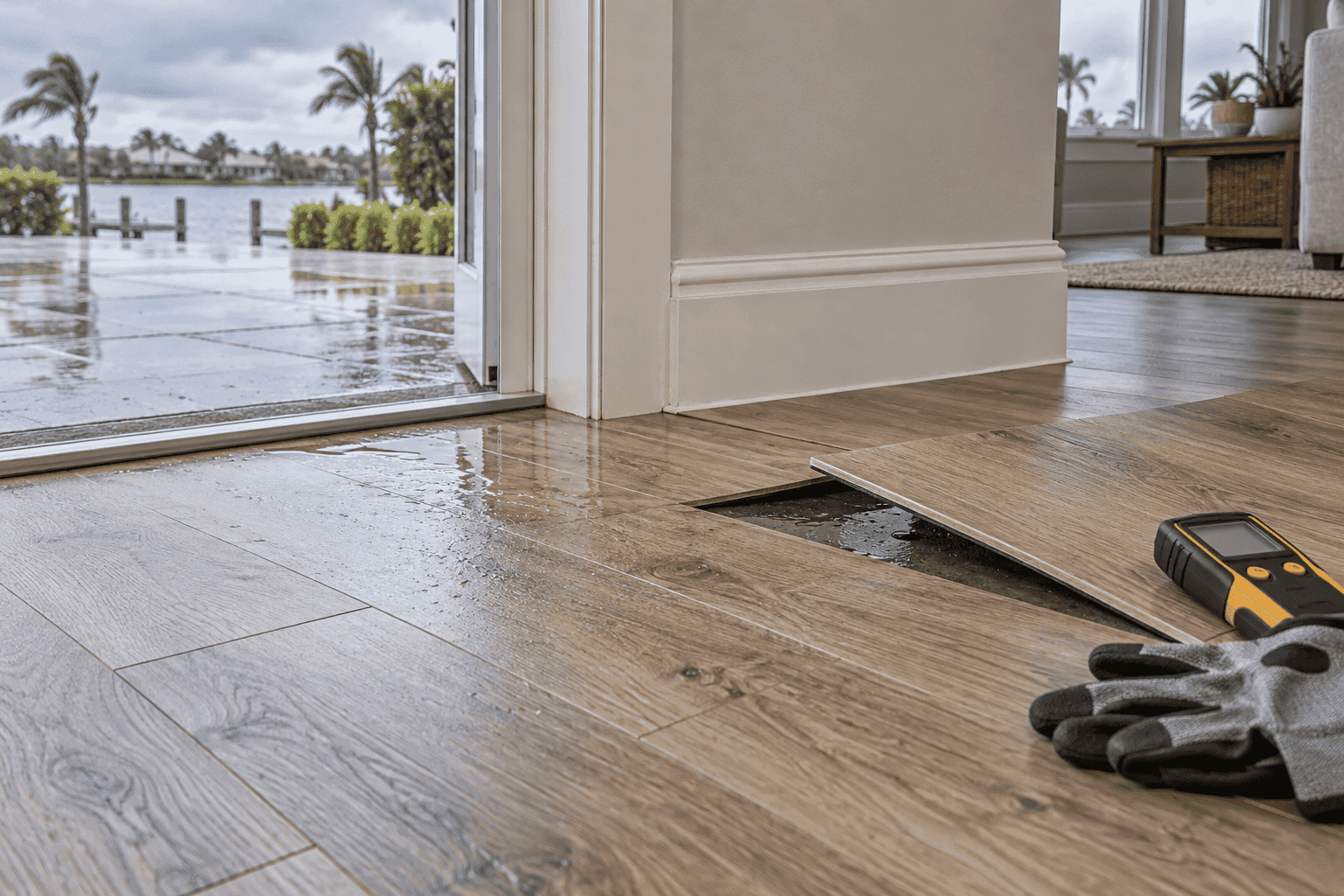
Water under LVP after a hurricane is easy to miss because the plank surface may look dry. After Hurricane Isaias brought damaging wind, heavy rain and widespread outages to Northwest Florida, many homeowners are checking for roof leaks, wind-driven rain and hidden moisture beneath their floors.
If water reached your luxury vinyl plank, the most important thing to understand is this: waterproof LVP does not make the entire flooring system floodproof. The plank itself may resist water, but moisture can still become trapped underneath it and affect the attached pad, concrete slab, wood subfloor, baseboards, drywall and nearby materials.
Quick Answer: What Should You Do First?
- Make sure the home is safe to enter.
- Photograph and video the damage before moving flooring or throwing materials away.
- Stop the water source if it is safe to do so.
- Remove standing water and begin drying the area promptly.
- Determine whether the water was clean rainwater or contaminated floodwater.
- Have the area beneath the flooring evaluated before reinstalling or replacing anything.
- Do not install new flooring until the subfloor meets the flooring manufacturer’s moisture requirements.
Safety Comes Before the Flooring
Do not enter an area with standing water if electricity may still be on. Floodwater can also contain sewage, chemicals, bacteria and other contaminants. Wear appropriate protective equipment and call qualified professionals when the cleanup is beyond what you can safely handle.
The U.S. Environmental Protection Agency recommends drying a flooded home and its contents within 24 to 48 hours when possible to help reduce mold growth. The EPA also warns that children, older adults and people with certain health conditions should not participate in disaster cleanup. You can review the EPA’s flooded-home cleanup guidance here.
Document the Damage Before Cleanup
Before removing planks, baseboards or wet materials, take clear photographs and video of:
- The source and approximate depth of the water
- Every affected room
- Damaged flooring, trim, walls and furniture
- Labels from flooring boxes or leftover planks
- Visible staining, lifting, buckling or trapped moisture
- Any emergency work performed to prevent additional damage
Keep receipts for cleanup, drying equipment and emergency repairs. Insurance coverage varies, so contact your insurance company for instructions before permanently discarding damaged materials when possible.
Waterproof LVP Is Not the Same as a Waterproof Room
SPC luxury vinyl plank is commonly described as waterproof because the rigid plank will not absorb ordinary surface spills the way carpet or some wood products can. That is useful during everyday life, but a hurricane creates a different situation.
Water can enter at walls, doorways, sliding doors, plumbing penetrations and expansion gaps. Once it gets below a floating floor, the tight locking system can slow evaporation and keep the slab or subfloor wet even when the surface appears dry.
The attached IXPE pad may also hold moisture or contaminants against the surface below. Baseboards, drywall and wood framing can absorb water even when the vinyl plank itself does not.
Clean Rainwater and Floodwater Are Different
A small amount of wind-driven rain discovered quickly is not the same as storm-surge water, sewage-contaminated water or water that has remained in the home for days.
If a limited amount of clean water entered and the planks were removed promptly without damaging the locking edges, some flooring may be reusable after the planks and the area beneath them are properly cleaned, dried and evaluated. Reuse still depends on the product, the attached pad, how the planks were removed and the manufacturer’s instructions.
If the flooring was exposed to contaminated floodwater, professional remediation is the safer course. A plank may look normal while contamination remains in the pad, locking joints, wall edges or materials below it.
Can LVP Be Saved After Water Gets Under It?
Possibly, but do not decide based only on how the top of the floor looks. Consider:
- Type of water: Clean rainwater presents a different risk than storm surge, sewage or unknown floodwater.
- Time: The longer moisture remains trapped, the greater the risk to the pad, subfloor and surrounding materials.
- Locking edges: Click-lock edges can break during removal, making the plank unsuitable for reuse.
- Attached pad: The pad must be clean, dry and undamaged.
- Subfloor condition: The slab or wood subfloor must be properly dried before it is covered again.
- Manufacturer instructions: Reinstallation must remain within the product’s installation and warranty requirements.
What If the LVP Is Over a Concrete Slab?
Concrete can hold and release moisture after the visible water is gone. A slab that looks dry at the surface may not yet be ready for new flooring. Before reinstalling LVP, the installer should follow the flooring manufacturer’s approved moisture-testing method and limits.
A moisture barrier can be part of a properly specified installation, but it is not a shortcut for covering an actively wet slab or an unresolved drainage problem. For more detail, read our guide: Do You Need a Moisture Barrier Under LVP on Concrete in Florida?
What If the LVP Is Over a Wood Subfloor?
Wood subfloors require special attention because prolonged moisture can lead to swelling, loss of strength, odors and mold. Drying the room air is not proof that the subfloor is ready to be covered. A qualified professional should evaluate the moisture level and physical condition of the wood before flooring is reinstalled.
Warning Signs of Moisture Under LVP
- Musty or earthy odors
- Water appearing at plank joints when stepped on
- Discoloration near walls or doorways
- Loose, separated or raised planks
- Swollen baseboards or soft drywall
- Visible growth or staining beneath removed trim
- Moisture readings that remain above the product’s limits
What Not to Do After Hurricane Water Reaches Your Floor
- Do not assume the area is dry because the plank surface is dry.
- Do not reinstall flooring over a wet slab or wood subfloor.
- Do not mix bleach with ammonia or other cleaning products.
- Do not use fans in a visibly moldy area without professional guidance, because air movement can spread contamination.
- Do not discard all damaged materials before documenting them and checking with your insurer when circumstances allow.
- Do not assume a thicker plank or extra underlayment will solve an active moisture problem.
Before New Flooring Is Installed
The source of the water should be corrected, damaged materials removed as appropriate, and the structure cleaned and dried. The subfloor should be flat, sound and within the flooring manufacturer’s moisture limits. Ask the installer to document moisture testing and confirm whether the selected product requires a separate vapor barrier over concrete.
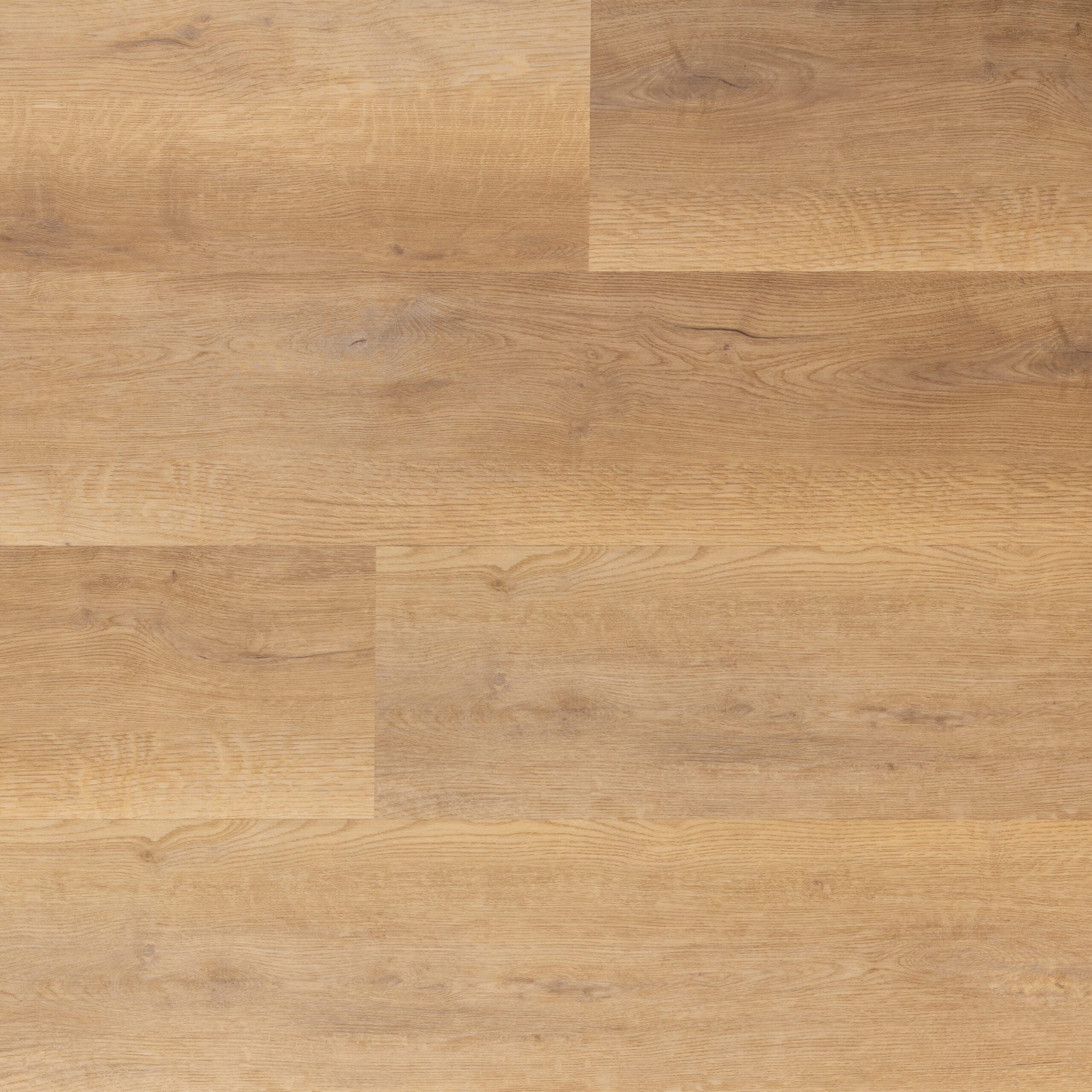
If you need replacement material, keep a sample of the original plank and any available box label. Color and pattern can vary between manufacturing runs, so an exact match may not always be possible even when the product name is the same.
How Case Floors Can Help
Case Floors of the Panhandle supplies waterproof SPC luxury vinyl plank from our Pace warehouse. We can help homeowners, contractors and property managers compare plank thickness, wear layers, attached pads and manufacturer requirements when selecting replacement flooring.
We supply flooring materials and do not perform installation or water-remediation work. Installer referrals are provided as a courtesy, and customers should independently verify the qualifications, insurance and scope of any contractor they hire.
If your flooring was damaged by Hurricane Isaias, bring us a dry sample or a clear photograph along with the room measurements. Visit Case Floors of the Panhandle in Pace or call 850-287-1889 to discuss current inventory.
Frequently Asked Questions About Water Under LVP
Can water under LVP cause mold?
Yes. The vinyl plank itself does not feed mold, but trapped moisture can affect dust, the attached pad, wood subfloors, drywall, baseboards and other materials beneath or beside the flooring. Prompt drying and inspection are important.
How long can water sit under vinyl plank flooring?
There is no universally safe waiting period. The EPA recommends drying flooded areas within 24 to 48 hours when possible, but contaminated water or a wet wood subfloor may require faster professional attention.
Does all LVP need to be replaced after a hurricane?
Not always. Limited clean-water exposure discovered quickly may allow some undamaged click-lock planks to be reused after proper cleaning, drying and evaluation. Flooring exposed to contaminated floodwater or damaged during removal may need replacement.
Can new LVP be installed as soon as the surface looks dry?
No. The concrete slab or wood subfloor should be tested and confirmed to meet the flooring manufacturer’s moisture limits before it is covered again.